Is a small-bay industrial property in Fort Lauderdale a smart buy right now? In many cases, the answer depends less on the headline cap rate and more on how well the building matches local tenant demand, how much capital it needs, and where it sits within Broward’s tighter industrial submarkets. If you are weighing an acquisition, this guide will help you evaluate the factors that matter most so you can underwrite with more confidence. Let’s dive in.
Why small-bay matters in Fort Lauderdale
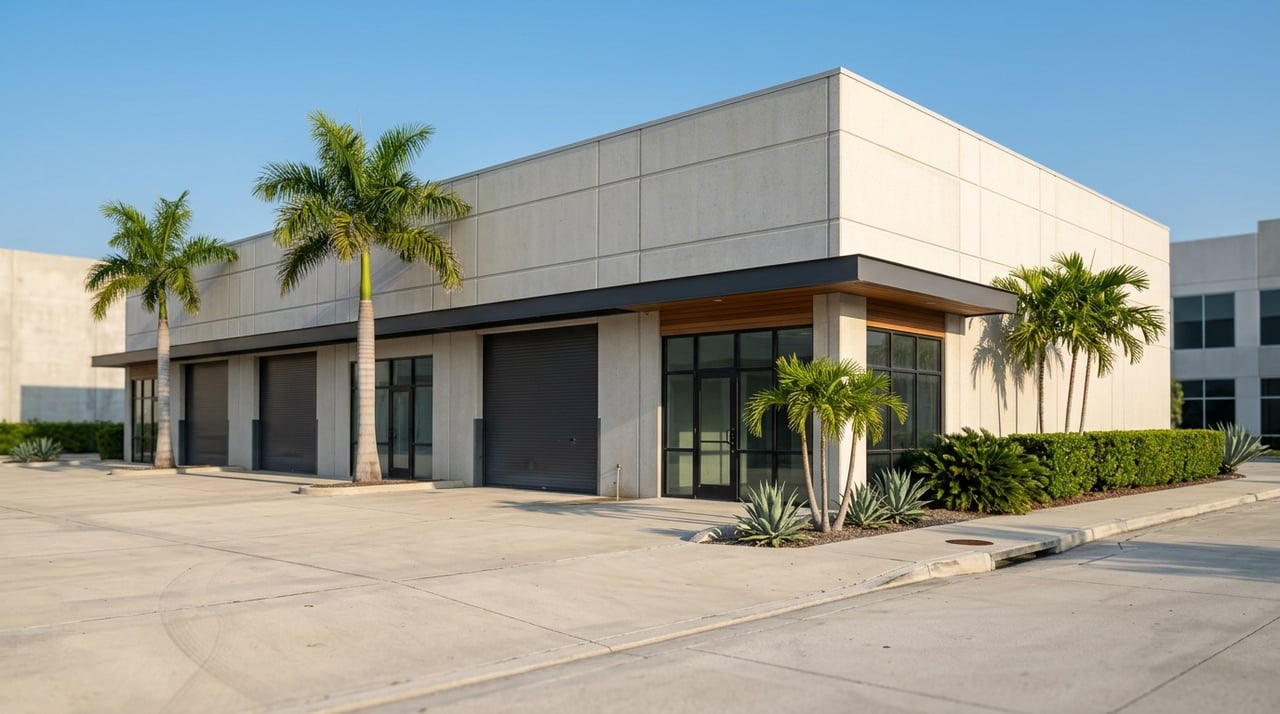
Small-bay industrial, often called shallow-bay or flex product, plays an important role in Fort Lauderdale’s commercial market. CBRE describes shallow-bay as buildings under 50,000 square feet with clear heights between 14 and 28 feet, while NAIOP defines flex buildings as industrial properties that can shift between office and warehouse use, typically with at least 20 percent office area.
That flexibility matters because many users in Broward are not looking for massive distribution centers. Instead, demand often comes from local and regional businesses that need practical warehouse space, a modest office buildout, and efficient access to customers, vendors, ports, and airports.
The age of the inventory also shapes the opportunity. CBRE reports that nearly half of shallow-bay inventory in major U.S. markets was built before 1980, and more than 80 percent was built before 2000. In a market like Fort Lauderdale, that means functionally sound small-bay space can be scarce, especially when newer alternatives are limited.
Broward market conditions to know
Broward remains a relatively tight industrial market by several major reporting sources. In Q1 2026, reported vacancy ranged from 5.4 percent to 5.8 percent, depending on the firm, while asking rents generally landed in the mid-to-high $17 per square foot range on an asking basis, with some variation by methodology.
Even with minor differences among reports, the main takeaway is consistent. Broward continues to lean more landlord-favorable than many industrial markets across the country, which supports occupancy and pricing for well-located industrial assets.
For investors, that backdrop is helpful, but it does not remove the need for careful underwriting. In a tighter market, you still need to distinguish between assets that offer durable functionality and those that may struggle with backfill costs, deferred maintenance, or weaker positioning.
Fort Lauderdale submarkets are not equal
Submarket selection can make a major difference in risk and performance. According to Cushman & Wakefield’s Q1 2026 reporting, vacancy was 2.4 percent in FTL Airport/Dania, 4.0 percent in FTL Central, 4.7 percent in FTL East/Central, and 4.3 percent in Southeast Broward.
Other areas were looser. Pompano Beach posted 7.5 percent vacancy, while Southwest Broward came in at 6.7 percent. Cushman also noted that most new supply was concentrated in North and Southwest Broward, helping explain why vacancy rose more sharply there.
For a buyer, this means location is not just about the street address. It is about whether your property sits in a tighter infill pocket with limited alternatives or in an area where newer supply may create more leasing competition.
Port and airport access support demand
Fort Lauderdale’s logistics network adds another layer of support for small-bay industrial demand. Port Everglades describes itself as one of Florida’s leading container ports, operating on 2,190 acres with more than 25,000 lineal feet of docks and including Foreign-Trade Zone No. 25.
The port also highlights activity from ancillary users such as security companies, import and export firms, food suppliers, and steamship agents. Those business types align closely with the kind of tenant profile that often occupies small-bay and flex space.
Fort Lauderdale-Hollywood International Airport is another key demand driver. Broward County reports that the airport served more than 32.2 million passengers in 2025, with nonstop service to 97 U.S. cities and 55 international destinations in 25 countries.
When you combine port activity, airport access, and infill business density, you get the kind of ecosystem that can support steady demand from service-oriented and trade-related tenants.
Tenant mix should drive your underwriting
One of the biggest mistakes buyers make is treating all industrial tenants the same. In Fort Lauderdale small-bay, the likely user base is often more local and service-oriented than a pure large-scale logistics model.
A practical tenant mix may include contractors and trades, light manufacturing users, distributors, secure storage and records users, and businesses that need a warehouse-office hybrid. This lines up with broader shallow-bay demand patterns identified by CBRE and with local user examples noted in market reporting.
That tenant mix can be attractive because it creates diversified demand. At the same time, it can also increase leasing complexity because smaller tenants often care deeply about layout, parking, office finish, loading configuration, and day-to-day usability.
Watch rollover and backfill risk closely
Lease rollover deserves close attention in this segment. Newmark reported that renewals were a major market driver in Broward during Q1 2026, with more than 845,000 square feet of renewals in the quarter and nearly 1.7 million square feet over the prior six months.
That matters because renewal-heavy conditions tell you two things. First, many tenants are staying put when the space still works for them. Second, when a tenant does leave, backfilling older or less functional space can become expensive and time-consuming.
Newmark also reported that landlords were offering generous lease incentives and that tenants were moving toward newer, more functional buildings. For buyers, this raises the importance of underwriting not just current rent, but also renewal probability, expected downtime, concessions, and tenant improvement costs.
Questions to ask about lease rollover
- How fragmented is the rent roll?
- Does one tenant represent an outsized share of income?
- How much office buildout is tailored to current occupants?
- How much downtime should you expect if a tenant leaves?
- What lease incentives may be needed to secure a renewal or replacement tenant?
- Is the building functional enough to compete with newer product?
Physical condition can outweigh the cap rate
In older small-bay product, capital needs can be just as important as entry pricing. Because much of the inventory was built decades ago, buyers should assume that the physical plant deserves a detailed review.
NAIOP notes that renovation often includes deferred maintenance and retrofits to systems such as HVAC, security, fire alarms, and energy management. In flex properties, office-heavy layouts may also need to be reworked to suit modern tenant needs.
If you buy based only on trailing income and ignore building condition, your returns can change quickly. A property that looks attractive at acquisition can become far less compelling once you factor in roof work, paving, HVAC replacement, loading upgrades, or office refresh costs.
Practical due diligence checklist
- Roof condition and remaining life
- HVAC systems and office finish quality
- Paving, striping, and parking condition
- Loading doors and dock or drive-in functionality
- Fire-life-safety systems
- Parking and vehicle circulation
- Drainage and stormwater performance
- Floodplain or elevation compliance, where applicable
Flood and drainage diligence matters in Fort Lauderdale
In Fort Lauderdale, flood and drainage review is not optional background work. It can directly affect your capital plan, permitting path, and future flexibility.
The City of Fort Lauderdale states that work in a Special Flood Hazard Area can require permits for construction, modifications, excavation, filling, paving, drilling, piling, dredging, grading, and the permanent storage of materials or equipment. The city also maintains active floodplain and stormwater programs.
For an investor, the takeaway is clear. If site work, drainage upgrades, paving changes, or flood mitigation may be needed, those costs and approvals should be considered early in underwriting rather than later in the ownership cycle.
How to think about cap rates
There is no single published cap rate for Fort Lauderdale small-bay industrial, but available data provides a useful framework. In CBRE’s H2 2025 cap-rate survey, Fort Lauderdale industrial stabilized cap rates were roughly 4.75 percent to 5.0 percent for Class A and 4.75 percent to 5.25 percent for Class B product.
Colliers reported that South Florida industrial cap rates averaged 6.3 percent in Q1 2026. Taken together, these figures suggest that cleaner, better-located small-bay or flex assets may trade tighter, while older assets with more management intensity or capital needs may require wider pricing.
A reasonable interpretation is that many Fort Lauderdale small-bay opportunities fall in a mid-5 percent to low-6 percent range, depending on quality, location, and near-term risk. The more rollover, capex, or functional obsolescence you see, the more disciplined your return threshold should be.
Focus on stabilized NOI, not just trailing NOI
When evaluating a small-bay acquisition, stabilized NOI is often the better lens than trailing NOI. NAIOP defines a stabilized cap rate as the ratio between NOI at target occupancy and market value, which is especially relevant when a property has short lease tails, rollover, or expected re-tenanting costs.
This is important in Fort Lauderdale because newer, more functional buildings are generally outperforming older inventory. If you underwrite only the in-place income without adjusting for likely downtime, concessions, and capital improvements, you may overestimate your true return.
A strong underwriting model should test:
- Renewal probability by tenant
- Expected downtime between occupancies
- Tenant improvement and leasing costs
- Market rent at stabilization
- Capital required to keep the building competitive
- Debt coverage after realistic stabilization assumptions
What stronger opportunities often look like
The most compelling small-bay opportunities in Fort Lauderdale are usually not defined by size alone. They tend to combine infill location, practical functionality, and manageable capital exposure.
In many cases, the better assets offer a tenant mix that aligns with local service, distribution, or light manufacturing demand. They also tend to have a clearer path to preserving occupancy because the space works for real users, not just for a spreadsheet.
That is the core investment thesis in this segment. You are not simply buying square footage. You are buying functionality, re-tenanting friction, and the long-term probability of occupancy.
If you are evaluating a Fort Lauderdale industrial acquisition, a disciplined review of submarket strength, tenant demand, rollover, building condition, and flood-related site considerations can help you separate durable value from avoidable risk. To discuss your asset strategy, connect with Florida Commercial Group.
FAQs
What is small-bay industrial in Fort Lauderdale?
- Small-bay industrial usually refers to shallow-bay or flex space, often in buildings under 50,000 square feet that can support warehouse, office, and service-oriented uses.
Why does submarket selection matter for Fort Lauderdale industrial buyers?
- Vacancy varies meaningfully across Broward submarkets, so your leasing risk and pricing power can change based on whether you buy in a tighter infill area or a location with more new supply.
What tenants typically lease small-bay space in Broward County?
- Common users often include contractors, trades, light manufacturing firms, distributors, records users, and other businesses that need a warehouse-office combination.
What is the biggest risk when buying older small-bay industrial property in Fort Lauderdale?
- Older assets can carry higher backfill risk and capital costs, especially if tenants prefer newer, more functional space or if the property needs upgrades to systems, loading, paving, or office areas.
Why is flood diligence important for Fort Lauderdale industrial properties?
- The City of Fort Lauderdale has floodplain and stormwater requirements that can affect permits, site work, paving, grading, storage, and future capital planning.
How should you evaluate cap rates for Fort Lauderdale small-bay industrial?
- Cap rate analysis should be tied to location, functionality, rollover, and capital needs, with more attention on stabilized NOI than on trailing income alone.