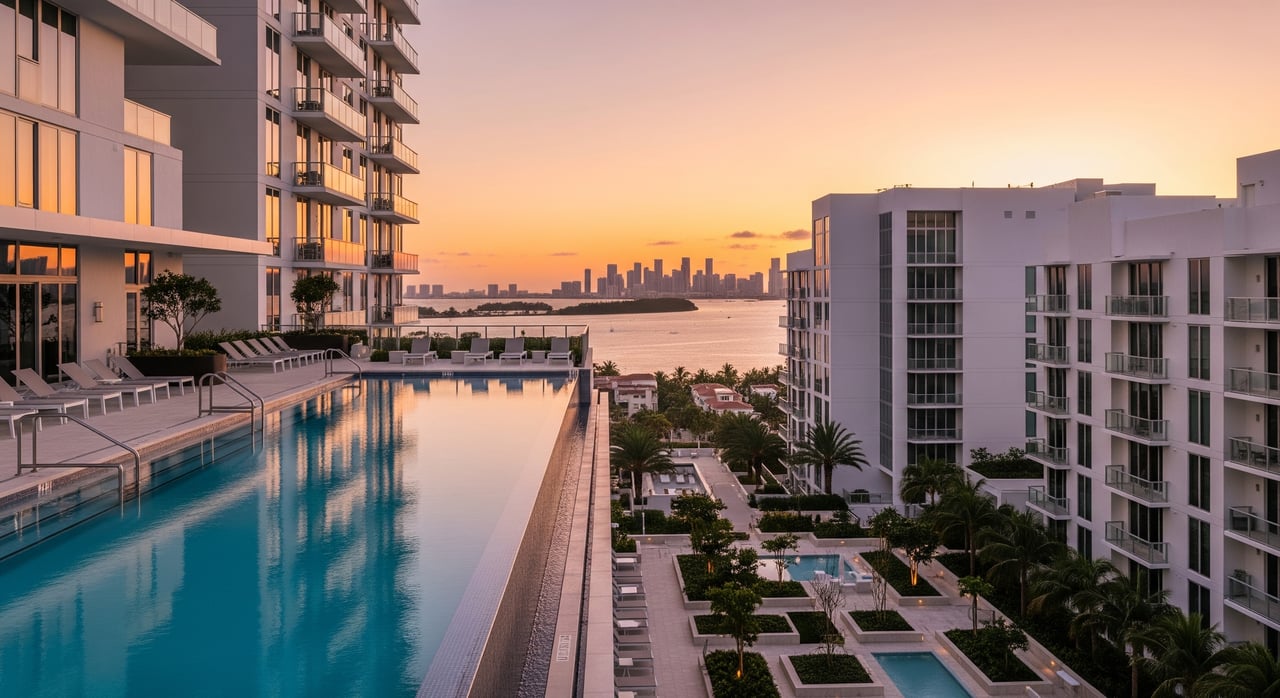
Are you looking for a market where rental demand stays resilient even as capital cycles shift? If you manage portfolios or place private capital, Miami offers a compelling mix of demographic growth, employment diversity, and global investor interest that is hard to replicate. In this guide, you’ll learn why capital targets Miami’s multifamily sector, where supply is concentrated, which strategies are working, and how to underwrite the key risks. Let’s dive in.
Demand drivers that support Miami-Dade
Population inflows and household formation
You benefit from steady population growth and positive net migration into Miami-Dade. Domestic movers from high-cost coastal metros and international immigrants expand the renter base across price tiers. Young professionals, downsizing households, and wealth in-migrants contribute to household formation that supports both Class A and well-located workforce product.
Diverse employment and trade connectivity
Miami’s economy spans tourism and hospitality, health care, professional services, finance, and trade and logistics linked to PortMiami and the airport. This mix creates varied renter cohorts, from service workers to high-income professionals seeking amenity-rich rentals. Corporate relocations and expansions reported in recent years have added higher-wage jobs that lift demand in select urban submarkets.
Tax and regulatory posture
Florida’s lack of a personal state income tax remains a magnet for high earners and corporate decision-makers. A generally owner-friendly regulatory environment, compared to markets with tighter rent regulations, supports investor interest. You should still verify current local ordinances when evaluating specific assets and business plans.
Supply and rental fundamentals
Where the pipeline is concentrated
Miami’s development pipeline includes luxury high-rises, transit-oriented infill, late-stage condo-to-rental conversions, and suburban garden communities. New supply clusters in downtown and high-demand neighborhoods such as Brickell, Edgewater, and parts of Miami Beach, with select suburban corridors across Miami-Dade seeing activity. Land constraints in some coastal areas limit large-scale additions, which can support performance for existing stock.
Rent growth and occupancy context
Miami recorded outsized rent gains during 2020 to 2022, led by urban, high-amenity product. As in most markets, rent growth moderated in 2023 to 2024 amid new deliveries and higher interest rates, yet occupancy has generally remained healthy relative to national averages. Performance varies by submarket and asset class, so model concessions, lease-up, and renewal spreads at the submarket level.
Product types attracting capital
Institutional buyers continue to focus on Class A high-rise and stabilized garden assets in durable locations. Value-add plays remain active where renovations and operational improvements can lift NOI. In constrained nodes, hotel-to-apartment and condo conversion strategies are used to create rental housing without ground-up entitlement risk.
Capital flows, pricing, and financing
Who is buying in Miami
Domestic institutions such as REITs, private equity, and pensions pursue scale opportunities and gateway-like liquidity. Cross-border investors from Latin America, Canada, Europe, and the Middle East add meaningful equity depth, especially for premium product. Local sponsors and developers remain active in value-add and development, creating diverse counterparties at exit.
Pricing and cap rates in context
Cap rates compressed during the low-rate period prior to 2022, especially for trophy and stabilized assets. Higher rates since 2022 increased financing costs and widened yield requirements, which tempered price growth and drove selective repricing in 2023 to 2024. When you underwrite, pair Miami’s rent growth potential with explicit modeling of expense inflation, insurance volatility, and exit cap scenarios.
Financing and liquidity
You have a range of lenders: balance-sheet lenders and life companies across core and core-plus, with agency executions for stabilized affordable or workforce assets, and bank or CMBS options where appropriate. Miami benefits from broad buyer pools that can support exit liquidity, though activity concentrates by submarket and product type. Calibrate hold periods and leverage to capital-market conditions to avoid forced timing risk.
Risks to underwrite and how to mitigate
Climate and insurance exposure
Hurricane, flood, and sea-level risks are material for coastal assets and translate to higher insurance costs and potential coverage limits. Lenders and buyers increasingly analyze elevation, hardening, floodproofing, and local resilience efforts. Invest in building hardening, elevate contingency reserves, and stress test pro formas for premium increases.
Supply concentration and competition
New supply is not uniform across Miami-Dade. Concentration in urban cores and luxury towers can pressure older assets on amenities and concessions in the near term. Track pipeline absorption, lease-up velocity, and rent-to-income ratios to position your asset against current and upcoming competitors.
Rates, cycles, and policy shifts
Valuations are sensitive to interest rates and cap rate movement across cycles. Affordability pressures can prompt policy responses, even as Florida maintains limits on rent control. Monitor legislative changes and maintain conservative exit assumptions to protect returns.
Practical underwriting checklist
Use this checklist to frame a Miami-Dade multifamily acquisition or recapitalization:
- Market and rent roll
- Compare current rent roll, renewal trends, and in-place concessions to market rents by unit type.
- Validate rent-to-income levels and exposure to seasonal versus year-round demand.
- Submarket and pipeline
- Map competitive deliveries, absorption history, and upcoming lease-ups within your radius.
- Note urban core versus suburban dynamics and amenity expectations by renter cohort.
- Insurance and climate
- Review current premiums, deductibles, wind coverage, and recent claims.
- Assess FEMA flood zone, elevation, property hardening, and local mitigation plans.
- Expenses and taxes
- Model conservative escalations for insurance, labor, utilities, and property taxes.
- Verify tax appeal history and planned assessments or infrastructure projects.
- Financing and exit
- Identify agency potential for stabilized assets and life company terms for core positions.
- Build base and adverse exit cap scenarios, factoring capital market volatility.
- Legal and title
- Confirm zoning, title, and any condo conversion restrictions for adaptive reuse.
Strategies working in Miami today
- Upgrade amenities in urban core assets to capture high-income rental demand.
- Improve operations through utility metering and energy retrofits to reduce controllable expenses.
- Reposition older properties into durable workforce housing with targeted renovations.
- Pursue condo conversion arbitrage where zoning and market depth support sales.
- Target neighborhoods benefiting from infrastructure and transit improvements to amplify rent growth.
Core versus suburban submarket notes
The city core including downtown, Brickell, and Edgewater continues to attract high-amenity development and premium rents. Suburban corridors across Miami-Dade deliver scale opportunities in garden-style assets with diversified renter profiles. Miami Beach remains supply constrained relative to land and regulatory limits, which benefits well-located existing assets. Align your business plan with each submarket’s renter mix, amenity standards, and pipeline timing.
The bottom line
Miami’s multifamily sector combines population inflows, employment diversity, and international capital depth with a development pipeline you can map and underwrite. Returns are driven by income growth potential, careful expense management, and disciplined exit assumptions in a shifting rate environment. If you pair market opportunity with rigorous climate and insurance analysis, Miami-Dade can serve as a durable anchor in a broader Sun Belt strategy.
Ready to evaluate a specific asset or reposition a portfolio? Connect with the senior advisory team at Florida Commercial Group to discuss underwriting, 1031 strategies, and investor outreach tailored to your goals.
FAQs
What makes Miami-Dade multifamily attractive to investors?
- Population growth, diverse employment, and global buyer depth support rent demand and exit liquidity, with varied product types to match different risk profiles.
Where is new multifamily supply concentrated in Miami?
- Deliveries cluster in downtown, Brickell, Edgewater, parts of Miami Beach, and select suburban corridors, so underwrite by submarket and pipeline timing.
How should I model insurance costs for Miami apartments?
- Review current premiums and deductibles, stress test for increases, and account for wind coverage, elevation, flood zones, and hardening investments.
Which financing sources are active for stabilized assets in Miami?
- Balance-sheet lenders and life companies are common, with agency executions competitive for stabilized affordable or workforce assets.
How do climate and flood risks affect underwriting in coastal Miami?
- Physical risks can raise premiums and capex needs, so evaluate FEMA mapping, property elevation, floodproofing, and local resilience initiatives.
What hold periods fit core versus value-add in Miami-Dade?
- Core and core-plus often fit 3 to 7 years depending on cycle conditions, while value-add and conversions can require 5 to 10 years for full stabilization.